Professional Experience

Reliability Analysis of the Boeing 737NG Outflow Valve

Duration 2 Months
Team Individual
Company Royal Air Maroc
Tools AMOS, Pareto Analysis, Boeing AMM/CMM
66
Failure Events Analyzed
24
OFV Components Assessed
12.12%
Top Failure Contributor (Gearbox)
74.24%
Cumulative Share — Top 12 Components

Reliability of a Flight-Critical Pressurization Component

This internship focused on the Cabin Pressure Control System (CPCS) of the Boeing 737NG fleet, and specifically on the Outflow Valve (OFV), the component that regulates cabin pressure by controlling the exhaust of bleed air overboard. Recurring OFV failures prompted a systematic reliability analysis, applying Pareto methodology to a dataset of 66 recorded failure events across 24 OFV components to identify priority targets for maintenance improvement.

Pneumatic System & Outflow Valve

The pneumatic system distributes engine and APU bleed air to several critical functions: cabin air conditioning packs, hydraulic and water reservoir pressurization, wing and engine cowl anti-icing. Within this architecture, the Outflow Valve sits at the core of the Cabin Pressure Control System, regulating the release of cabin air to maintain the pressure differential required for safe flight.
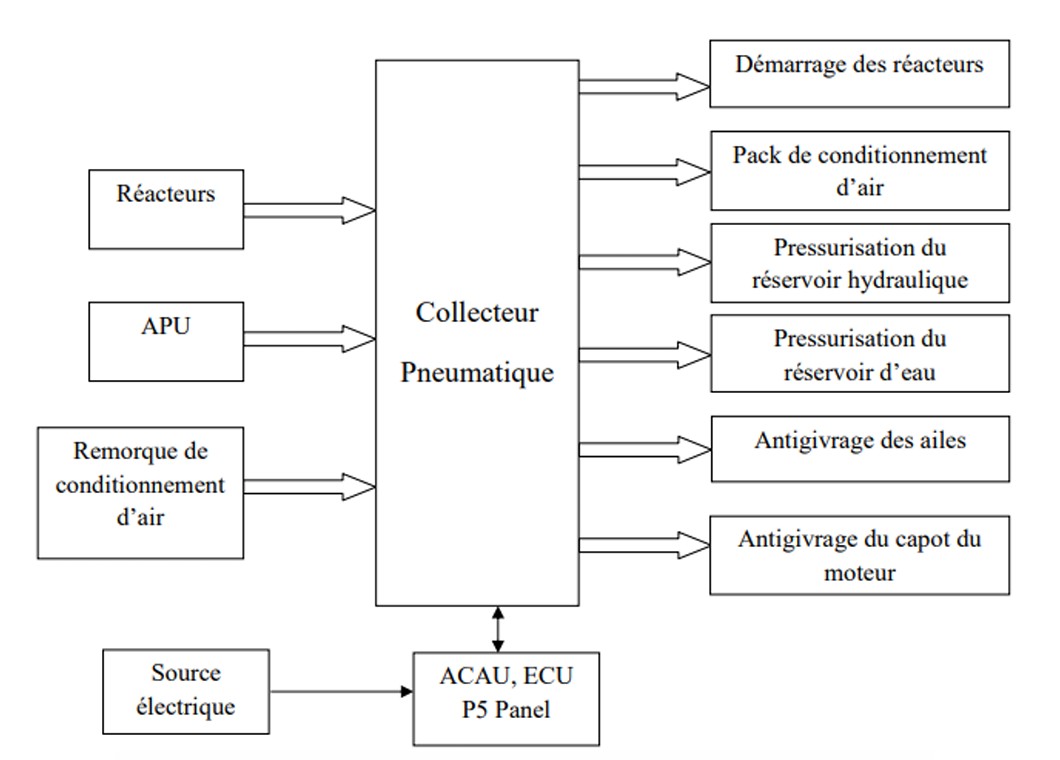
Diagram showing the boundary and distribution of the Boeing 737NG pneumatic system, from bleed air sources to cabin pressurization, anti-icing and reservoir functions
Diagram showing the boundary and distribution of the Boeing 737NG pneumatic system
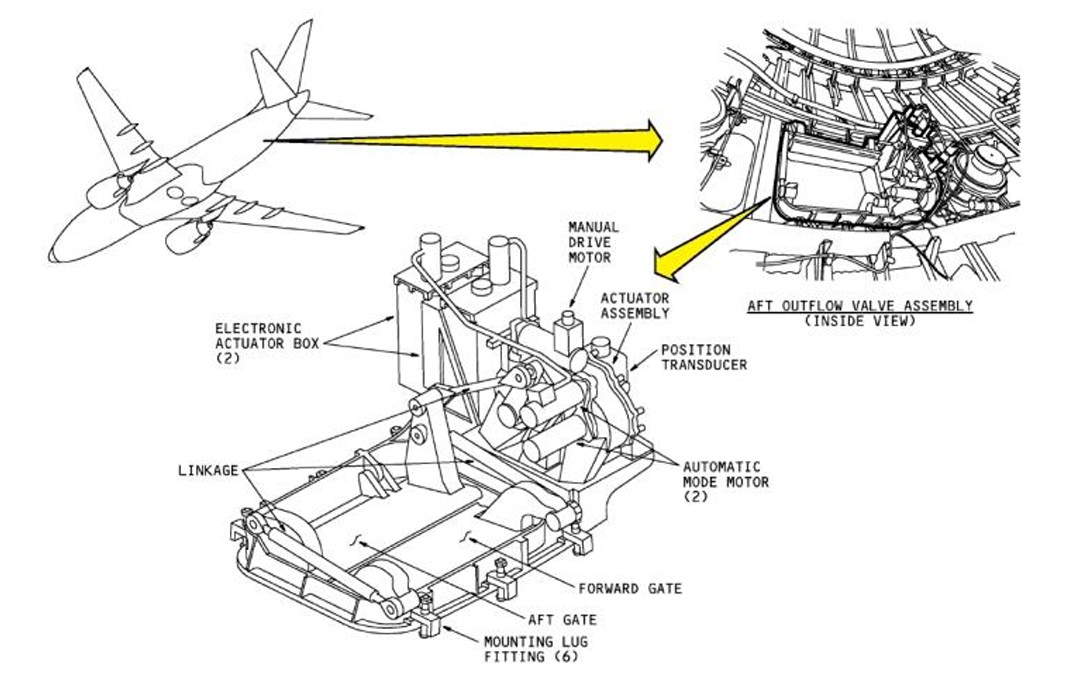
Aft outflow valve assembly showing the actuator box, forward gate, aft gate and mounting lug fitting
Aft Outflow Valve Assembly : Actuator Box, Forward Gate, Aft Gate and Mounting Lug Fitting
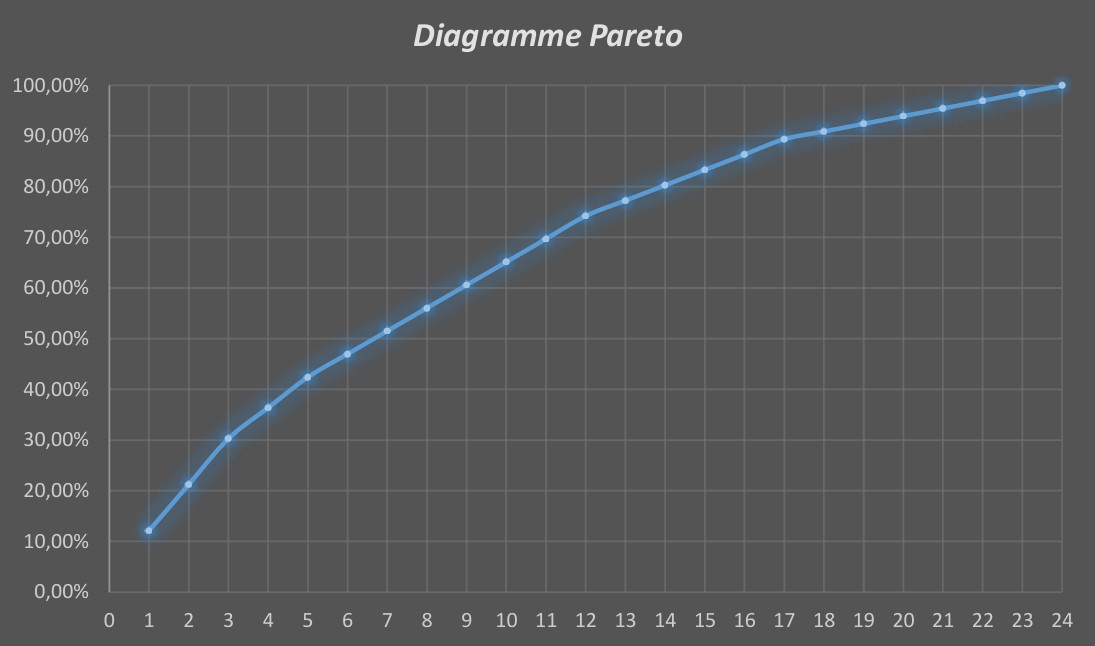
Pareto Failure Analysis

Failure records for the OFV were compiled across 24 distinct components and analyzed using the Pareto (80/20) principle to identify which components drive the majority of failures and should be prioritized for reliability improvement.

Component Individual Failure Rate (%)
Gearbox12.12
Aumot 19.09
Foils antiskating9.09
Connecteur J33.03
Grounding cables3.03
Potentiometer3.03
OFV Component Failure Rate : Top Contributors
Tier Scope Cumulative Share of Total Failures
Top 3 components Gearbox, Aumot 1, Foils antiskating 30.30%
Top 12 components Through "Anti-slip foil" 74.24%
Secondary priority zone Connecteur J3, grounding cables, potentiometer and similar components (~3.03% each) 20.76% of cumulative failures
Remaining components Ranked 13th to 24th 25.76% (derived: 100% − 74.24%)
OFV Failure Distribution : Cumulative Breakdown
Pareto diagram ranking OFV components by their individual and cumulative contribution to total failures
Pareto Diagram Ranking OFV Components by Individual and Cumulative Failure Contribution

80/20 Insight

Fewer than half of the 24 tracked OFV components (12 out of 24) account for 74.24% of all recorded failures, with the Gearbox alone responsible for 12.12%. This identifies a clear, data-driven priority list for maintenance and reliability improvement efforts.

Outcome

66
Failure Events Analyzed
12.12%
Gearbox : Leading Failure Cause
74.24%
Cumulative Failures, Top 12 Components

The Pareto analysis converted a large, unstructured failure history into a clear, prioritized maintenance target list, starting with the Gearbox, Aumot 1 and Foils antiskating, which together already account for nearly a third of all recorded OFV failures.

Key Takeaways

This internship combined hands-on exposure to a flight-critical aircraft system, the Boeing 737NG pneumatic and cabin pressure control system, with a rigorous, data-driven reliability methodology to turn raw failure records into actionable maintenance priorities.